
News Posts matching #17 nm

Return to Keyword Browsing

CXMT Breaks 9,000 MT/s Barrier with DDR5

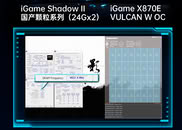
Chinese memory giant CXMT has finally surpassed 9,000 MT/s on the AMD platform, rivaling DRAM kits from Micron, SK hynix, and Samsung. On the Colorful iGame X870E VULCAN W OC motherboard, an iGame Shadow II 24G×2 kit with 48 GB of memory achieved speeds of 9,000 MT/s. In the provided screenshot, the kit runs at 4,507 MHz, which translates to over 9,014 MT/s, thanks to double data rate technology. Late last year, CXMT announced that its DDR5 could reach 8,000 MT/s, but now we see that overclocked memory can exceed these speeds on the AMD platform.

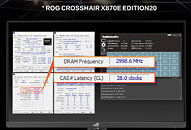
Additionally, CXMT is working on improving latency. Some Colorful iGame Shadow II 24Gx2 48 GB kits are being tested on ASUS motherboards to achieve ultra-low latency, matching the performance of the top three memory manufacturers. On the latest AMD and Intel platforms, Colorful has tested DDR5 kits running at 6,000 MT with CL30 latency and even some preliminary tests with CL28 latency. This is a promising sign that CXMT memory is finally meeting the standards of competing DRAM from the leading memory makers in both transfer rate and latency.

CXMT Surpasses 90% DDR5 Yield, Challenges Industry Giants

Chinese memory giant CXMT has reportedly achieved a significant milestone in DDR5 production, with manufacturing yields now comfortably above 90%. This is comparable to what major manufacturers like Samsung, SK hynix, and Micron are achieving. According to reports, CXMT uses a 17 nm node for DDR5 chip production and has reached a 90% yield for these chips. This is only 2-3% lower than Samsung's yield on its 10 nm class node for DDR5 production, indicating that CXMT's production quality is matching that of the world's largest memory maker. This is a remarkable achievement for a company that excels in cleanroom construction time, taking only 12 months to build its fab's cleanroom compared to the two years others require. As the company plans to end the year with 350,000 DRAM wafers per month, high yields mean there is little waste or leftover.

Chinese MyDrivers also notes that PC OEMs have mixed reactions to adopting CXMT DRAM in their products. For instance, Dell has completely banned the use of CXMT in its machines, while HP only allows CXMT DRAM in its Chinese PCs. Major Taiwanese brands such as ASUS and Acer have increased adoption in some models, as they have more flexibility in supply chain procurement. However, both companies use CXMT memory for PCs sold in mainland China and some emerging markets, meaning the West is still far from receiving PCs with CXMT memory modules. PC OEMs are also cautious about procuring CXMT memory due to concerns about disrupting their relationships with the big three memory makers.

CXMT Achieves 80% Yield for DDR5 Chips, HBM2 Production and Capacity Expansion Underway

According to a recent Citigroup analysis, CXMT, China's domestic memory chipmaker, is demonstrating significant progress in its DDR5 production yields. The company's DDR5 yield rates had reached approximately 80%, marking a substantial improvement from its initial 50% yields when production began. This progress builds on CXMT's experience with DDR4 manufacturing, where the company has achieved yields of around 90%. The company currently operates two fab facilities in Hefei, with Fab 1 dedicated to DDR4 production on 19 nm process technology and a 100,000 wafer per month capacity. Fab 2 focuses on DDR5 production using 17 nm technology, with a current capacity of 50,000 wafers per month. CXMT's DDR5 yields could improve further to approximately 90% by the end of 2025.

Despite these improvements, CXMT faces technological challenges compared to industry leaders. The company's current production process is 19 nm for DDR4 and 17 nm for DDR5, lagging behind competitors like Samsung and SK Hynix, which manufacture 12 nm DDR5 chips. This technology gap results in higher power consumption and less favorable form factors for CXMT's products. The company primarily targets domestic Chinese smartphone and computing OEM customers. Looking ahead, CXMT plans to expand its DDR5 and HBM capabilities, with a potential additional capacity of 50,000 wafers per month at Fab 2 in 2025, if market conditions prove favorable. The company is also making progress on HBM2 development, with customer sampling underway and low-volume production expected to begin in mid-2025.
Return to Keyword Browsing
Nov 12th, 2026 00:02 CST change timezone

New Forum Posts

Popular Reviews

TPU on YouTube

Controversial News Posts