Thursday, November 12th 2026

AMD Advances Built-in Protection from Physical Attacks for Security-Critical Systems
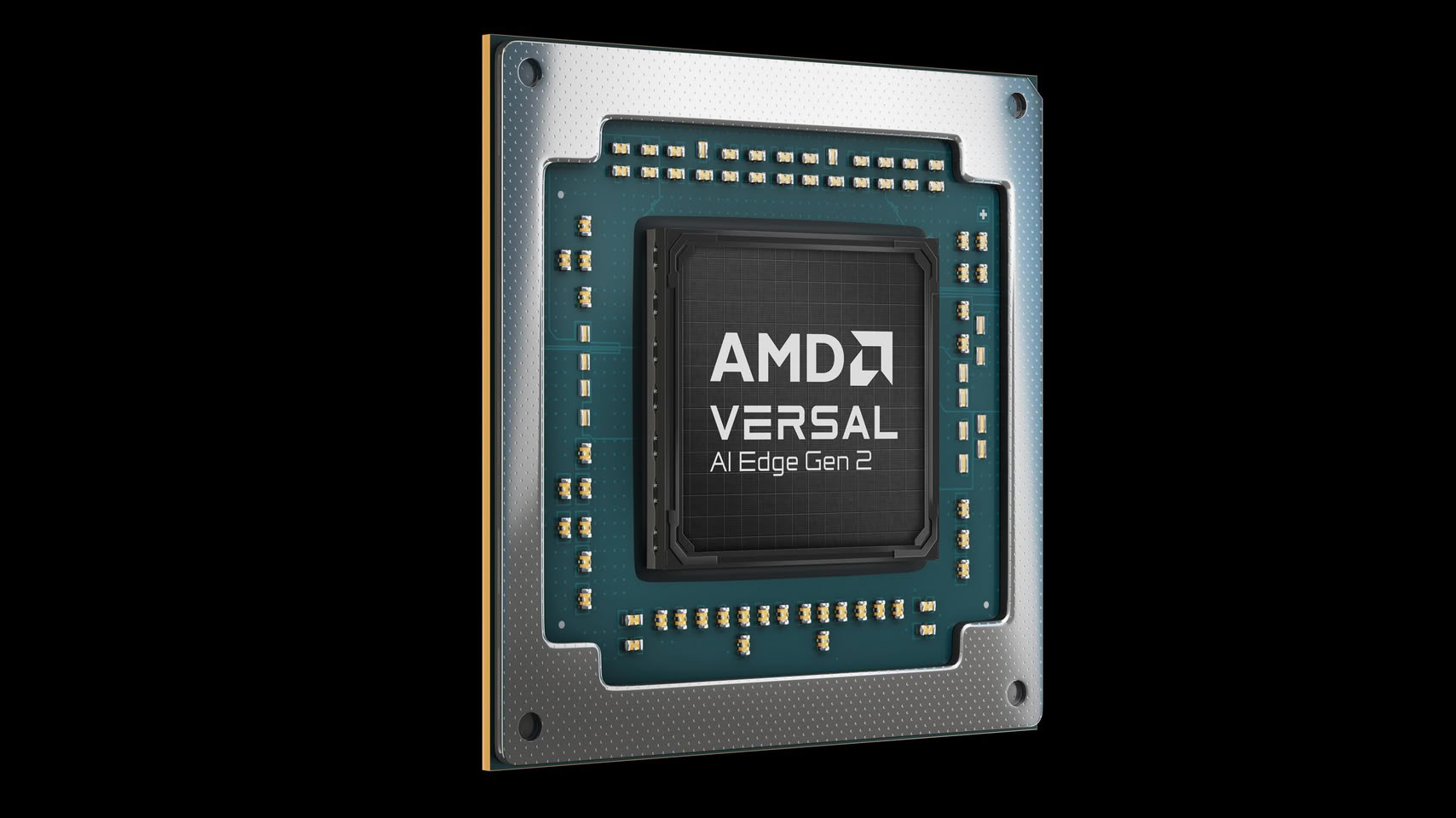
What's the News? AMD today announced AMD Versal tamper-resistant ("TR") devices, designed to protect security-critical information against sophisticated physical attacks while delivering the high-performance heterogeneous processing capabilities of AMD Versal AI Edge Series Gen 2. Versal TR devices are the industry's first adaptive SoC or FPGA-based devices providing built-in protection against physical attacks on the silicon backside. A sensor-based protection die is bonded to the main compute die using 3D active-on-active technology, shielding the entire backside of the device, protecting sensitive information, detecting physical attacks and preventing boot if the protection die is tampered with or removed. Combined with embedded CPUs, AI Engines and programmable logic, Versal TR devices help customers strengthen the protection of security-critical information without compromising system performance, size, weight, power or time to market.
Why It Matters? Protecting sensitive information from sophisticated physical attacks is a priority across markets and embedded applications. From data center networking and fintech applications to defense systems and critical industrial infrastructure, customers seeking higher levels of device security today typically build custom solutions in-house using mechanical enclosures, ASICs and other components, adding development cost, specialist resources, verification effort and re-spin risk. Versal TR devices integrate heterogeneous processing with enhanced security features including backside physical attack protection in a single device. This reduces the need for separate compute, security and enclosure-based protection components. This approach can save board area and simplify board design versus custom solutions while giving customers access to AMD tools, technical support and a broad partner ecosystem. What's the Role for AMD?
Versal TR devices combine multiple layers of physical and cryptographic protection with Versal AI Edge Series Gen 2 heterogeneous compute. In addition to backside protection, devices feature:
Based on Versal AI Edge Series Gen 2 adaptive SoCs, Versal TR devices integrate Arm CPUs, AI Engines, programmable logic, hard IP and connectivity, delivering up to 229,000 DMIPS of scalar compute, up to 369 INT8 TOPS and up to 543,000 LUTs.
The Versal TR portfolio includes three devices - 2VE3358TR, 2VE3558TR and 2VE3858TR - that provide a common platform across different performance and cost requirements. Each Versal TR device also has a footprint-compatible standard counterpart available today, allowing customers to develop on the standard Versal platform and transition to the Versal TR device with minimal effort without rerunning synthesis or place and route.
When Will AMD Versal TR Devices Be Available?
The first Versal TR devices are expected to sample in the second half of 2027 and move to production in the first half of 2028. Customers can evaluate and build designs on select footprint-equivalent standard Versal AI Edge Series Gen 2 devices today and later transition to the corresponding tamper-resistant device while keeping their high-performance design intact.
Source:
AMD
Why It Matters? Protecting sensitive information from sophisticated physical attacks is a priority across markets and embedded applications. From data center networking and fintech applications to defense systems and critical industrial infrastructure, customers seeking higher levels of device security today typically build custom solutions in-house using mechanical enclosures, ASICs and other components, adding development cost, specialist resources, verification effort and re-spin risk. Versal TR devices integrate heterogeneous processing with enhanced security features including backside physical attack protection in a single device. This reduces the need for separate compute, security and enclosure-based protection components. This approach can save board area and simplify board design versus custom solutions while giving customers access to AMD tools, technical support and a broad partner ecosystem.
Kirk Saban, corporate vice president, Product, Software and Solutions, AMD Embedded"Protecting critical information requires continued innovation in silicon security capabilities to stay ahead of emerging threats. With Versal tamper-resistant devices, AMD is bringing built-in protection against physical attacks together with high-performance heterogeneous compute in a commercial adaptive SoC, helping customers simplify the development of security-critical systems while maintaining the performance and flexibility their applications demand."What Do AMD Versal TR Devices Deliver?
Versal TR devices combine multiple layers of physical and cryptographic protection with Versal AI Edge Series Gen 2 heterogeneous compute. In addition to backside protection, devices feature:
- Expanded hardware acceleration for post-quantum cryptography, including new support for Module-Lattice-Based Digital Signature Algorithm (ML-DSA) and Stateless Hash-Based Digital Signature Algorithm (SLH-DSA).
- Hybrid boot flow support that allows users to leverage multiple signature algorithms.
- Application security unit (ASU) key vault improvements and a new memory element aging sensor (MEAS) provide additional safeguards for cryptographic keys.
Based on Versal AI Edge Series Gen 2 adaptive SoCs, Versal TR devices integrate Arm CPUs, AI Engines, programmable logic, hard IP and connectivity, delivering up to 229,000 DMIPS of scalar compute, up to 369 INT8 TOPS and up to 543,000 LUTs.
The Versal TR portfolio includes three devices - 2VE3358TR, 2VE3558TR and 2VE3858TR - that provide a common platform across different performance and cost requirements. Each Versal TR device also has a footprint-compatible standard counterpart available today, allowing customers to develop on the standard Versal platform and transition to the Versal TR device with minimal effort without rerunning synthesis or place and route.
When Will AMD Versal TR Devices Be Available?
The first Versal TR devices are expected to sample in the second half of 2027 and move to production in the first half of 2028. Customers can evaluate and build designs on select footprint-equivalent standard Versal AI Edge Series Gen 2 devices today and later transition to the corresponding tamper-resistant device while keeping their high-performance design intact.
4 Comments on AMD Advances Built-in Protection from Physical Attacks for Security-Critical Systems
This protection just bumps it all up like 10 notches. Instead of using simple wire or other low-level protection, another chip is bonded on top of the FPGA and this chip contains several layers for detecting various attacks. Methods vary, but anything from directly drilling into it, blasting it with X-RAYs, lasers, microwaves etc. will be detected and it will instantly trip the protection, wiping the keys and rendering it useless. Also all interconnects are using inner layers so there is no way to disconnect this protection layer or poke at it's signals.
Obviously this is very specialized chip that will only be used on a few special devices where it really matters, like again for the banking sector or protecting confidentiality, holding keys for private computing etc. Something where possible attacks are expected to be from very motivated people with literally infinite budgets.