Saturday, November 21st 2026

Phison Previews an SSD That Runs AI Frameworks on Its Own NPU
Everyone's going all in on AI, so SSD manufacturers were not going to be left behind. Phison has detailed an enterprise SSD design that can run AI frameworks on the drive itself. At the Supercomputing 2026 (SC26) event in Chicago, the company showed off the computational storage design that hosts both an NPU and 64 GB of onboard memory running at 130 GB/s. It also supports PyTorch, vLLM, OpenVINO, and llama.ccp. Phison says this SSD could cut data transfers by 10 to 100 times for suitable workloads. It achieves that by scanning and processing the dataset in parallel, so it only sends back the relevant results instead of moving the entire dataset over the host. The company uses DMIPS to rate its NPU performance instead of using TOPS, which is a bit unusual.
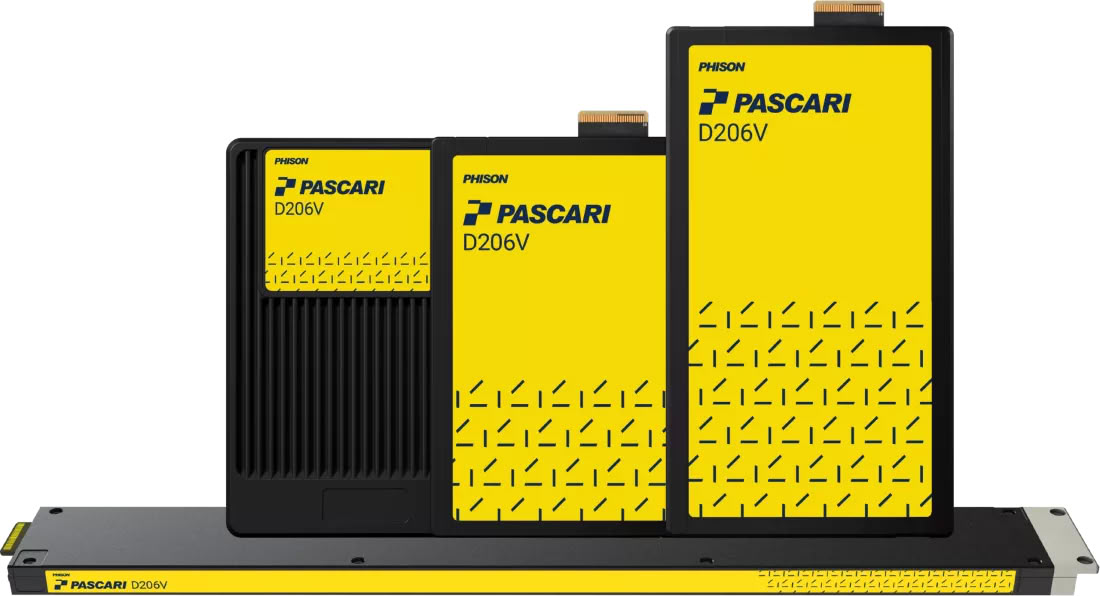
Phison has shown off other AI-focused storage projects before, and this SSD is the latest one in that chain. At the same event, Phison showcased a Mixed media design that removes the need for dedicated cache drives by putting high-endurance pSLC and QLC flash behind a single 16-channel controller. Phison says that losing one drive in a 24-drive server would cost only 4% of the cache instead of the usual 25%. Its showcase also included the PCIe Gen 6 X3 controller that was first shown at Computex. As for the SSD with the built-in NPU, it is sparse on details for now. We don't know what kind of controller, interface, form factor, or memory type it uses or plans to use. These are products that are still in development, so it's best to treat them as proof of concepts for now.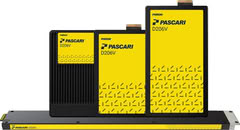
Sources:
Phison, via TechSpot
Phison has shown off other AI-focused storage projects before, and this SSD is the latest one in that chain. At the same event, Phison showcased a Mixed media design that removes the need for dedicated cache drives by putting high-endurance pSLC and QLC flash behind a single 16-channel controller. Phison says that losing one drive in a 24-drive server would cost only 4% of the cache instead of the usual 25%. Its showcase also included the PCIe Gen 6 X3 controller that was first shown at Computex. As for the SSD with the built-in NPU, it is sparse on details for now. We don't know what kind of controller, interface, form factor, or memory type it uses or plans to use. These are products that are still in development, so it's best to treat them as proof of concepts for now.
6 Comments on Phison Previews an SSD That Runs AI Frameworks on Its Own NPU
some websites write very friendly about "host memory buffer" storage devices. I really wonder why one of the main nvme / sata ssd controller manufacturer sees things differently?
do not worry, we have plenty of DRAM. Those who pays the most money will get it. I think it was RAM Altman on X . com where "it" shows off a big pile of DRAM. I checked bing recently and found that X post from RAM Altmann. do not confuse wiht SAM Altmann which may belong to openai or similar company.
I do expect 8Gib DRAM soldered per 1TB pcie 4.0 nvme. It has it use. I also expect existing DRAM to be better used and shared from GPU, Storage, AIO Coolers, etc. for the hole system.
www.tokenpost.com/news/business/51979