Friday, October 3rd 2025

Intel Updates NPU Driver to Support Android for PC Project
Intel has today pushed an update to its NPU driver for Linux, impacting Core Ultra "Meteor Lake", "Arrow Lake," and "Lunar Lake" processors. However, among the list of changes spotted by X user @SquashBionic is an interesting support for the Android platform, likely hinting at the Android for PC project. At Qualcomm's 10th annual Snapdragon Summit, Google teased its Android for PC project, and Qualcomm's CEO described it as very impressive. Google plans to merge its ChromeOS and Android for PC projects into a single branch, which will be Android for PC. That will include all of Google's best AI technologies from Gemini, now running on a more powerful mobile design. Some of these designs could be very well powered by Intel.
While preliminary details about Android for PC are unknown, the project will be aiming to compete with Windows in everyday tasks. Google could end up sourcing SoCs from Snapdragon for Arm-based designs, and Intel/AMD for x86-based laptops. With now added support for Intel NPU support for Linux driver—Android, a Linux-based OS—could become an optimization target for various non-mobile SoCs from Intel and AMD. Google plans to re-enter the PC ecosystem with the plan to converge mobile and desktop experiences, and Android for PC could allow designs that feature good battery life, portability, and satisfactory performance targets.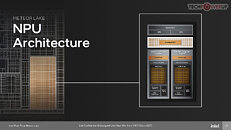
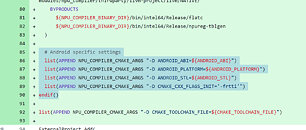 Of course, users have been able to install Android OS on x86 hardware for ages. However, optimizations for newer features, such as NPUs, are not very common and require additional effort to get started. With Intel pushing specific optimizations for Android compilation from source, we could see a significantly enhanced version of Google's re-entry into the PC market, featuring more optimizations and AI enhancements. Other specific things could be on the menu, but we have yet to find that out as Google rolls out more news and drops more hints.
Sources:
@SquashBionic on X, Phoronix, Intel on GitHub
While preliminary details about Android for PC are unknown, the project will be aiming to compete with Windows in everyday tasks. Google could end up sourcing SoCs from Snapdragon for Arm-based designs, and Intel/AMD for x86-based laptops. With now added support for Intel NPU support for Linux driver—Android, a Linux-based OS—could become an optimization target for various non-mobile SoCs from Intel and AMD. Google plans to re-enter the PC ecosystem with the plan to converge mobile and desktop experiences, and Android for PC could allow designs that feature good battery life, portability, and satisfactory performance targets.


22 Comments on Intel Updates NPU Driver to Support Android for PC Project
6.1" 120Hz LTPO OLED (pretty standard and should be cheap)
Either a Core Ultra 7 256V or Ryzen AI 7 350 downclocked to peak at around 10W (surprisingly the newer phone chips aren't much less power hungry then that)
16GB LPDDR5-8000 (around that speed)
No SSD installed, but slot easily accessible behind the clipped on back cover
Removable 5000 mAh battery (it can be encased in a metal case a la the iPhone 17 so users don't blow themselves up)
IP67 Water Resistance via a rubber gasket instead of adhesive (like my Galaxy S5)
Magnesium alloy internal frame and rubberized plastic exterior (like a ThinkPad of old)
1-inch OIS main camera with variable aperture and variable zoom (I think the multiple cameras design is a wasteful horrible idea just to make it thinner)
Internal 100mAh battery for hot swap batteries
www.techpowerup.com/341292/google-teases-android-for-pc-to-converge-mobile-and-desktop-experiences
I have an Asus-made x86 machine running Oreo. It is 11 years old, has an Intel Atom quad core, made exclusively for Android. I highly doubt it can run the yet to be released Android for PC.It is not going away, where did you get this fud? Are you confusing signed apps made by registered devs requirement with sideloading?
Second, if their plan wasnt heavy handed, why are so many people against it?
Third, why do they need the developers to id themselves but supposedly, google dont care about their apps?
Google is going out of their way to find ways to block apps like Smartube because once that dev register with them, we can be sure that the app will be blocked.
Granted, its early and there are many unanswered questions but if you really think that this is to help us the consumers, you are mistaken.
Why not making Windows phone again? I used Microsoft Smartphone 2003 OS back in early 2000 which is Windows CE based, I play Doom and Doom II on it and runs great using Ti OMAP 710 CPU. I don't like that Android and iOS is the only choices there should...ah forget it with what M$ did with Windows these days I don't think they will bring anything good. Load things up with massive spyware and phoning home every few femtosecond.
This is way off topic, but relatable because we dont know how Android for PC will load/install/run/get programs.
I don't see any discussion from you in this thread:That thread is full of mis-statements and assumptions and untruths. If you drill just passed the surface, you will see that it is a choice to keep your device certified or not. Alt-repos signed by registered or unregistered devs aren't going anywhere. The news article is abiut following goog's rules for official/trackable/profitable gains. You as end user don't fall into that category.
But fingers crossed that in the end this turns out into a nothingburger.
I tried by saying I have native android x86 machine, nothing about Windows or loading x86 android on bare metal.
I tried by linking an article published on this website saying Android for PC is going to be a new OS.
I tried by saying my x86 android machine probably wont run the new-yet-to-be-released Android for PC.
Clamshell might be nice too :) I mean this just screams for a small keyboard
I'm not saying that the roadblock is an electrical or PCB routing limitation. I'm saying there isn't a market for it, apart from exceptions like an x86 smartphone running Android, think something like the ASUS ZenFone 2 ZE551ML. I think those died because Intel gave up on Atom for phones, almost like how NVIDIA gave up on Tegra for phones.
If you want to relive that experience or as a newbie, go through the suffering that a few of us did, try the 7" HIGOLE F9B or the 5.5" HIGOLE GOLE 2 Pro. Ergonomics will be worse compared to the phones I mentioned above, but the overall experience is similar.
ViewSonic VCP08: Only two units are known to exist and those were strictly meant for display purposes. The first display unit has an Atom Z500, the second display unit has an Atom Z510. That's the only difference that I could remember.
ITG xpPhone 2: Several units exist but I do not know the exact number. Someone on reddit owns it though.